

Some of the most memorable places on a trip are often found far from the main road.
It might be a gravel track behind a campground, a quiet dirt road near a countryside stay, or a viewpoint hidden beyond the parking area. A car is useful for covering long distances, but once the road becomes narrower and the ground more uneven, it may no longer be the most practical option.
Walking is always a good way to slow down and notice the landscape. But if you are carrying photography gear or only have half a day to explore several places, distance and energy can quickly become limiting factors.
In outdoor areas where motorized vehicles are allowed, electric off-road riding can fill the space between driving and hiking. The goal is not to make the journey faster or more extreme, but to move more easily between campgrounds, trail access points, and places hidden beyond paved roads.
First, Make Sure the Route Is Open to Riding
One of the most tempting sights on a trip is a quiet dirt road that seems to lead somewhere unexplored.
But an empty road is not automatically open to motorized vehicles. National parks, nature reserves, public land, private property, and commercial campgrounds may all follow different rules. Some allow vehicles only on designated routes, while others are open only to hikers and regular bicycles. Certain areas may also require registration or a permit.
When planning an electric dirt bike trip, the first step is not comparing performance. It is confirming whether the planned route legally allows that type of vehicle.
Check information from local land managers or campground operators, or contact your accommodation directly. Ask which roads are open, whether vehicle types are restricted, if there are operating hours, and whether any additional permits are required.
This is especially important when traveling across states or regions. Do not assume the same rules apply at every stop. Spending a few minutes checking in advance is much easier than arriving and discovering that the entire riding plan is not possible.
A Map Cannot Show the Full Condition of a Route
A line on a map may look smooth and simple, but the reality on the ground can be very different.
The same route may be firm and dry in good weather, then turn muddy and slippery after rain. A slope that barely appears on a map may include loose gravel, tight turns, or sudden drops.
Before setting out, look beyond distance. Check recent weather, elevation changes, and surface conditions. Advice from campground staff, local riders, or recent visitors can often be more useful than the map itself.
When entering an unfamiliar route for the first time, start with a short section. See whether there is enough room to turn around and notice how the bike responds on gravel, grass, or a gentle incline before deciding whether to continue farther.
If the road narrows, the weather changes, or the terrain begins to feel beyond your ability, turning back is not a failure. Outdoor travel is not about proving how far you can go. It is about knowing when to continue and when to stop.
Choose the Bike Based on Where You Plan to Ride
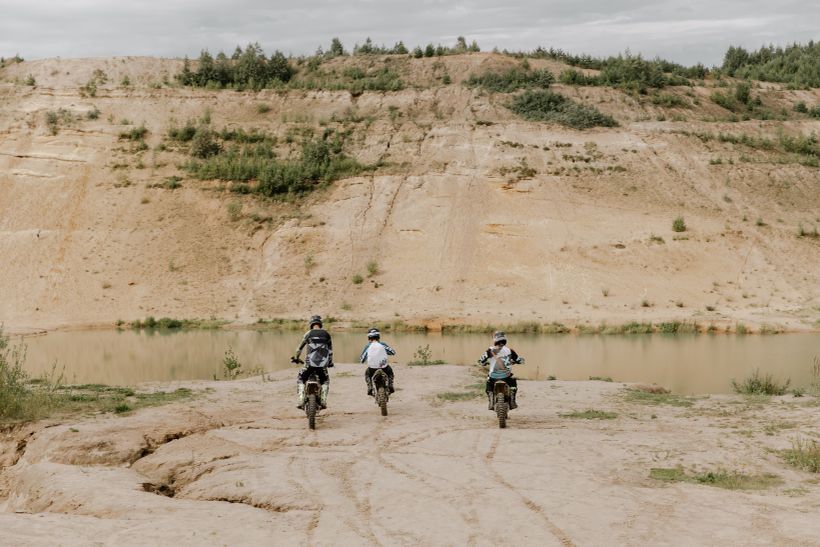
Many first-time buyers compare power, speed, and range. For travelers, however, the more useful question is whether the bike suits the route ahead. For campground roads, smooth dirt tracks, or open private land, controlled starts, easy turning, and low-speed stability are often more important. Routes with repeated climbs, loose gravel, or soft ground require more attention to tires, suspension, braking, and real-world range.
Vehicle size also affects the trip. A larger bike may be harder to transport and more awkward to turn around on a narrow road. A compact model may be more manageable, but it still needs to match the rider’s height, strength, and experience.
For example, the Qronge X1 Spark M is a mini electric dirt bike with a compact frame and 14"/12" wheels, making it better suited to riders who value agile handling, campground mobility, and light outdoor routes.
The most useful bike for travel is not always the one with the most impressive numbers. It is the one that is easy to load, easy to control, and unlikely to leave you struggling on an unfamiliar dirt road.
Do Not Make a Remote Trail Your First Practice Area
Arriving at a destination and immediately heading into the woods may sound adventurous, but it is not the best place to learn a new bike.
Start in a flat, open area away from pedestrians. Practice moving off, turning slowly, stopping smoothly, and making tight turns. Electric power delivery can feel immediate, so even a small throttle movement may produce a noticeable response.
If the bike offers different riding modes, begin with the gentler setting. Once starting, braking, and turning feel natural, gradually move on to gravel, grass, or mild slopes.
On an outdoor route, the important skill is not quick acceleration. It is being able to stay calm and controlled when the surface suddenly changes.
Do Not Calculate the Return Trip Too Tightly
Maximum range figures are only a reference. Rider weight, luggage, temperature, tire pressure, slopes, and surface conditions can all affect how quickly the battery drains.
Repeated climbs, frequent stops, and soft ground usually use more energy than a smooth road. Even if the map suggests the round trip should fit within the listed range, leave extra capacity for detours, closed roads, and changing weather.
No one wants to reach the best viewpoint of the day and realize there is only enough battery for a one-way trip. Check the remaining charge regularly. If the first half of the route uses more energy than expected, turn back earlier rather than hoping the next section will be easier.
For multi-day trips, confirm in advance whether the campground has a suitable charging point and bring the correct charger. The goal is not to use every last bit of battery. It is to make sure you always have enough to return.
Quiet Riding Still Requires Consideration
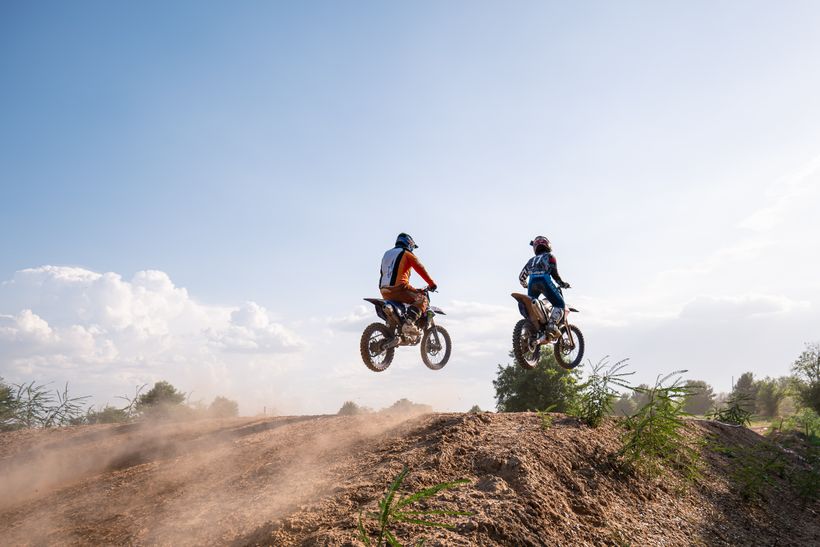
Electric riding is usually quieter than using a gas-powered off-road vehicle, which can be an advantage for camping, photography, and nature-focused travel.
However, lower noise also means hikers and other campers may not hear you approaching. Slow down near pedestrians, cyclists, and campsites, and leave plenty of space. If you encounter livestock or wildlife, do not approach suddenly or try to follow them.
When using an electric motorcycle in outdoor areas, pay attention to the effect of the tires on wetlands, soft soil, and vegetation. Stay on open routes, avoid cutting across grass to save time, and do not enter closed areas for a photograph.
A good outdoor trip is not only enjoyable for the rider. It also avoids creating unnecessary problems for other people and the environment.
Add Safety Gear to Your Travel Checklist
Even for a short route, wear a helmet, gloves, knee protection, elbow protection, and footwear that supports the ankles. If you plan to travel far from the campground, carry water, a basic first-aid kit, offline maps, a light, and a backup power source.
Before each ride, spend a few minutes checking the battery mount, tires, brakes, chain, and visible wiring. If the throttle response feels unstable, a part is loose, or you notice an unusual smell or sound, stop and inspect the bike.
These preparations may not feel like the most exciting part of the trip, but they can prevent the kinds of problems that quickly ruin a day outdoors. In places with weak phone service or long distances from camp, dealing with a problem before departure is always easier than trying to find help later.
Let Riding Become Part of the Journey
An electric off-road bike can take travelers from a campground to a more distant route entrance and shorten sections that would otherwise require a long walk. But once you reach a lake, viewpoint, or wildlife area, parking the bike and continuing on foot often makes it easier to notice the wind, changing light, and shape of the landscape.
The bike does not need to cover the entire journey. It works best when the car can go no farther, but the remaining walking distance still feels a little too long. Ride when it makes sense, stop when it does not, and the trip will feel less like a distance race.
When the route is suitable and the preparation is done, electric off-road riding can become as natural a part of outdoor travel as a tent, a camera, or a map. It may help you move beyond the main road, but what stays with you is still the scenery along the way and the quiet sense of relief that comes with returning safely.
More Blog Posts
- How to Set Up a US LLC as a Non-Resident Digital Nomad (and Pay Zero Taxes Legally)
- Bangkok: 10 Free Coworking Spaces And Work-Friendly Cafes (Open 24-7!)
- How Digital Nomads and Content Creators Make Money in 2025 (Hint: It’s Nas.io)
- The Best Travel Jobs – 50 Ways To Make Money While Traveling The World
-
I Want To Travel For The Rest Of My Life - 15 Travel Bloggers Tell How To Do It
- How to Become a House Sitter, Travel the World, and Never Pay for Accommodation
- For the Wanderlust in You: How to Earn a Living As a Digital Nomad
-
How I Created My Dream Job In Less Than A Year (Just By Doing What I Love)
Thank you for reading. If you like this article, please share!

About the Author:
Jennifer Anders is a freelance writer who has traveled extensively and enjoys exploring off-the-beaten-path locations around the world.
She loves hiking national parks, windsurfing, and photographing wildlife.
Aside from all those crazy activities, you'll also find her eating plenty of local street food. She is absolutely fearless when it comes to trying new things.